Complete Guide to Diamond Shapes and Cuts: 12 Profiles Compared
verified
Lavish Gemological & Technical Research Team schedule
10 min read event
Last Updated: October 2026
Diamond shape defines the architectural silhouette, facet geometry, and personal aesthetic of a gemstone. From the classic 57-facet Round Brilliant to the geometric step cuts of Emerald and Asscher, explore the technical specifications and ideal ratios of all 12 major diamond cuts.
Length-to-Width (L:W) Ratios: Governs aesthetic balance—e.g. 1.35–1.45 for classical Ovals, 1.40–1.50 for elegant Emerald cuts.
Bow-Tie Management: Critical consideration for elongated shapes (Oval, Pear, Marquise); master faceting aligns light paths to prevent dark center shadows.
Step Cut Transparency: Emerald and Asscher cuts feature large open tables requiring VS1 or higher clarity to ensure eye-clean purity.
In diamond faceting, all 12 major shapes fall into three distinct architectural categories based on their facet arrangements:
Brilliant Cuts (Round, Oval, Cushion, Radiant, Princess, Pear, Marquise, Heart): Composed of triangular and kite-shaped facets radiating from the center toward the girdle. Engineered specifically to maximize total internal reflection, white scintillation, and rainbow fire dispersion.
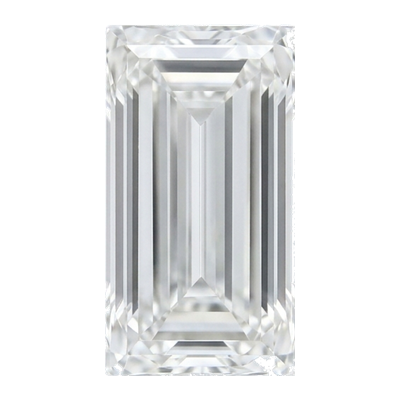
Step Cuts (Emerald, Asscher, Baguette): Composed of rectilinear, parallel facets running staircase-like along the perimeter of the stone. Step cuts emphasize crystalline transparency, sharp geometric reflections, and the famous “hall-of-mirrors” optical pattern.
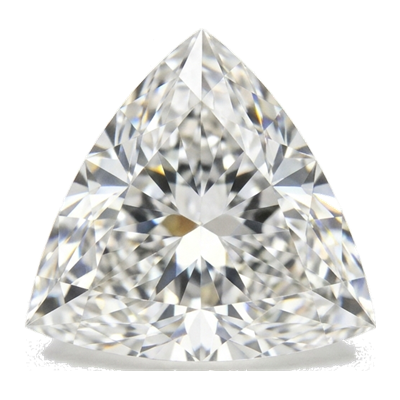
Mixed / Modified Cuts (Trilliant, Modified Cushions): Combine elements of step cutting on the crown with brilliant faceting on the pavilion to achieve both structural elegance and dynamic scintillation.
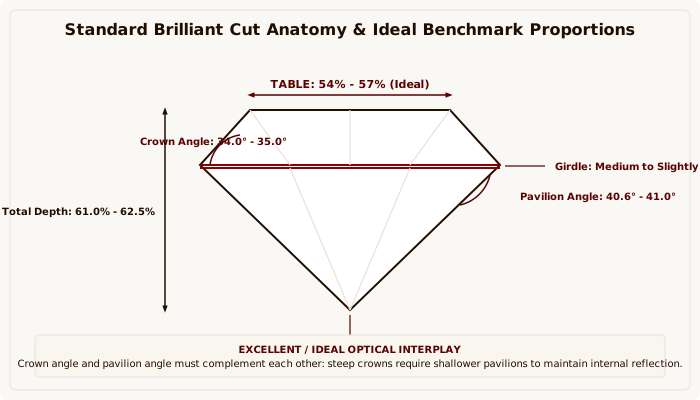
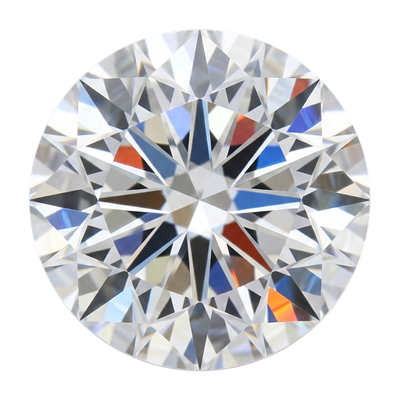
The Round Brilliant is the undisputed king of diamond shapes, accounting for over 50% of global diamond engagement ring sales. Composed of exactly 57 facets (or 58 including a faceted culet), its cone-like geometry is mathematically calibrated to reflect maximum light back through the crown. Ideal length-to-width ratio is strictly 1.00 : 1.00.
Tolkowsky's 1919 mathematical model establishes strict benchmark angles: 34.5° crown angle paired with a 40.75° pavilion angle. In lab-grown diamond manufacturing, HPHT cuboctahedral rough produces exceptionally high yield and optical symmetry for Round cuts, whereas CVD tabular rough is frequently optimized for fancy cuts.
Setting Recommendation:4 or 6-Prong Solitaire; optimal for all ring settings
2. Oval Cut (Elongated Fire & Grace)
Oval CutModified Brilliant
Facets:57 – 58
L:W:1.35 – 1.45
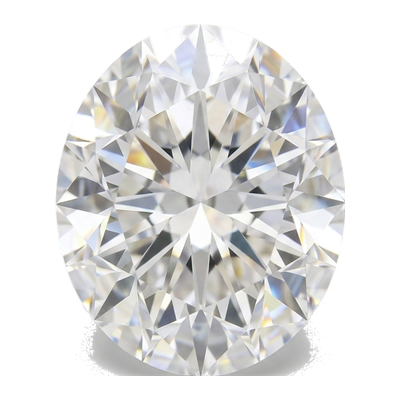
Created in the late 1950s by Lazare Kaplan, the Oval Brilliant cut delivers similar scintillation to a Round diamond while creating an elegant lengthening effect on the wearer's finger. Optimal classic length-to-width ratio ranges between 1.35 and 1.45.
Master cutters balance the pavilion depth to prevent excessive bow-tie shadows across the central table. Ovals offer an expansive face-up surface area, appearing up to 10% larger than a round diamond of equal carat weight.
Setting Recommendation:4 or 6 prongs; delicate east-west or north-south mountings
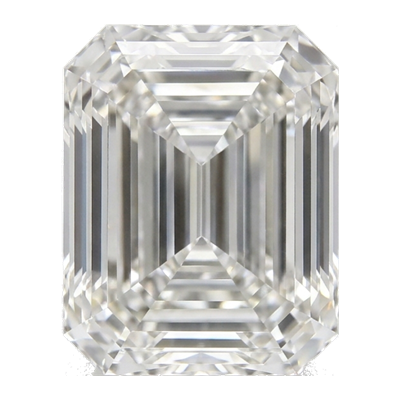
3. Emerald Cut (Architectural Art Deco Step Cut)
Emerald CutStep Cut
Facets:50 – 58
L:W:1.40 – 1.50
Originally developed to cut emerald gemstones without cleaving fragile corners, the Emerald cut features a rectangular outline with cropped corners and concentric parallel step facets. With an optimal length-to-width ratio of 1.40 to 1.50, the Emerald cut showcases diamond clarity and optical purity.
Because its large open table provides an unobstructed view into the stone, step cuts lack the 'crushed-ice' masking ability of brilliant cuts. Lavish recommends selecting VS1 or VVS clarity to guarantee an eye-clean center.
Setting Recommendation:4-corner prongs or full bezel; requires VS1+ clarity
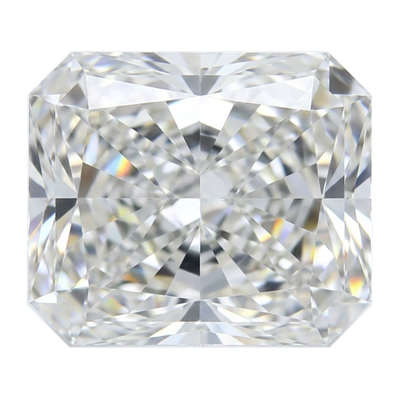
4. Radiant Cut (Crushed-Ice Brilliance with Trimmed Corners)
Radiant CutModified Brilliant
Facets:70
L:W:1.20 – 1.30
Patented in 1977 by Henry Grossbard, the Radiant cut combines the elegant rectangular outline and clipped corners of an Emerald cut with the vibrant, multi-faceted scintillation of a brilliant cut (70 facets). Ideal ratio is 1.20 to 1.30 for rectangular or 1.00 to 1.05 for square.
The Radiant cut produces an intense 'crushed-ice' sparkle that conceals minor inclusions exceptionally well. Its trimmed corners make it considerably more durable against accidental impacts than pointed Princess cuts.
Setting Recommendation:4 prongs with corner protection; stunning in solitaires and halos
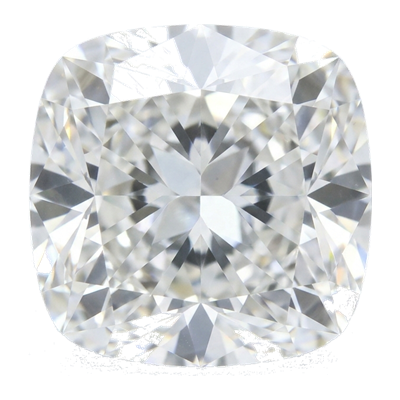
5. Cushion Cut (Romantic Pillow Silhouette)
Cushion CutModified Brilliant
Facets:58
L:W:1.00 – 1.05 / 1.15 – 1.25
Also known as the 'pillow cut,' the Cushion cut features a square or rectangular perimeter with softly rounded curved edges and corners. Descended from the historical Old Mine cut of the 19th century, modern cushions are available in both 'Cushion Brilliant' (large, chunky facet flashes) and 'Cushion Modified Brilliant' (crushed-ice scintillation).
Preferred ratio ranges from 1.00 to 1.05 for square, and 1.15 to 1.25 for elongated cushions. Its rounded corners give it a soft, romantic antique charm.
Setting Recommendation:4 prongs, vintage halos, or bezel settings
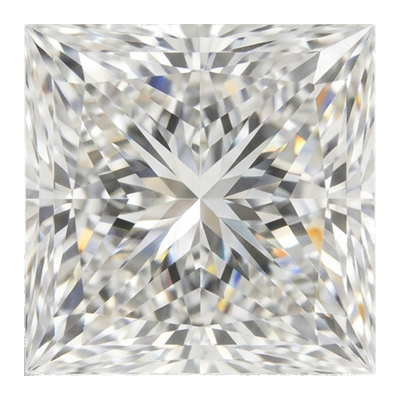
6. Princess Cut (Modern Geometric Square)
Princess CutSquare Modified Brilliant
Facets:57 – 76
L:W:1.00 – 1.03
The Princess cut is the second most popular diamond shape worldwide. Featuring a crisp, 90-degree square outline with inverted pyramid pavilion facets, it delivers outstanding brilliance and modern geometric lines. Ideal length-to-width ratio is 1.00 to 1.03.
Because its four pointed corners are vulnerable to accidental chipping during setting or daily wear, prongs must be designed as V-shaped prongs to fully shield the corners.
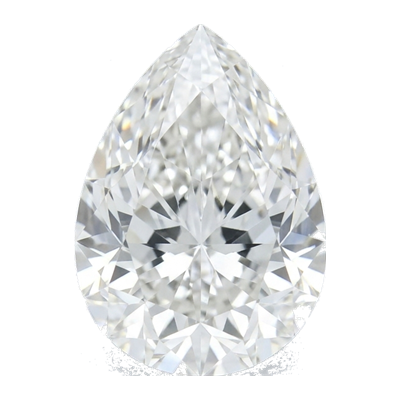
Combining the round brilliant cut with a marquise point, the Pear shape (teardrop) features a rounded curved base tapering gracefully to a single sharp point. Ideal ratio is 1.50 to 1.65. When worn with the point facing the fingernail, it creates an elongated slimming illusion on the hand.
Like Princess cuts, the delicate single tip must be protected with a dedicated V-prong. Master cutters calibrate the curvature of the shoulders to avoid boxy or flattened profiles.
Setting Recommendation:V-tip prong protecting point + 4 or 5 body prongs
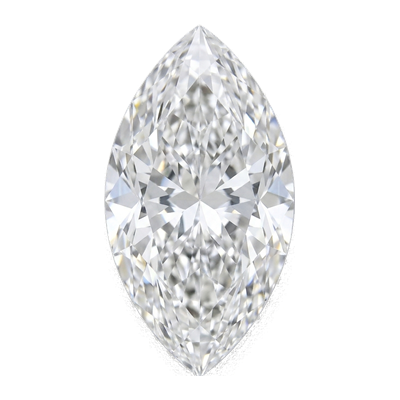
8. Marquise Cut (The Royal Navette Silhouette)
Marquise CutModified Brilliant
Facets:58
L:W:1.85 – 2.05
Commissioned in the 18th century by King Louis XV of France to resemble the lips of the Marchioness Madame de Pompadour, the Marquise cut (navette) features an elongated oval outline with two pointed tips. With an ideal ratio of 1.85 to 2.05, the Marquise cut delivers the largest face-up surface area per carat of any diamond shape.
Both pointed ends must be cradled in protective V-prongs. High symmetry is paramount to ensure the two tips align in a straight central axis.
Setting Recommendation:V-end prongs protecting both pointed tips
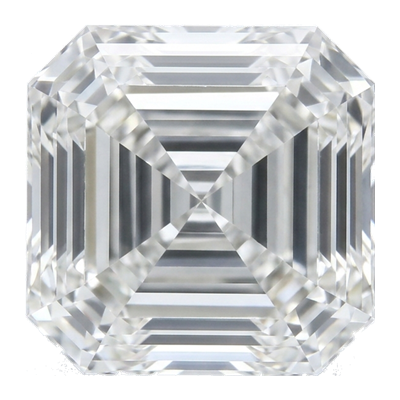
9. Asscher Cut (Square Step Cut with Windmill Facets)
Asscher CutSquare Step Cut
Facets:58 – 74
L:W:1.00 – 1.04
Created in 1902 by the famous Asscher brothers of Amsterdam, the Asscher cut is a square step cut with heavily cropped octagonal corners and a high crown. The steep pavilion facets create a mesmerizing optical 'windmill' pattern drawing the eye into the center. Ideal length-to-width ratio is strictly 1.00 to 1.04.
Its architectural geometry and vintage Art Deco heritage make it a favorite for connoisseurs. High color (D-F) and high clarity (VVS/VS1) are recommended due to its expansive table facet.
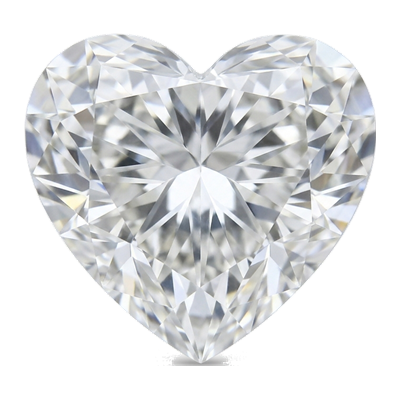
The ultimate romantic silhouette, the Heart shape modified brilliant cut requires master faceting craftsmanship. The cutter must fashion two identical rounded lobes, a sharp, clean central cleft, and a distinct pointed bottom tip. Ideal length-to-width ratio is 0.95 to 1.05.
Diamonds below 0.70 ct are rarely recommended in heart shape because the cleft becomes difficult to define in smaller sizes. Setting designs should feature a V-prong at the base.
Setting Recommendation:3 or 5 prongs with V-tip on bottom point
11. Baguette Cut (Sleek Linear Accent Stones)
Baguette CutLinear Step Cut
Facets:14
L:W:1.50 – 2.50+
Named after the French word for 'rod' or 'stick,' the Baguette cut is an elongated, clean rectangular stone with straight parallel step facets (14 facets). Available in both straight and tapered silhouettes, baguettes provide sleek architectural lines that complement large brilliant solitaires.
In calibrated wholesale lots, baguettes must be sorted with strict millimeter tolerances (+/- 0.02 mm) to enable seamless setting in eternity bands and Swiss watch dials.
Setting Recommendation:Channel, bar, or bezel settings; side stones
Developed in the Netherlands, the Trilliant (or Trillion) cut is an equilateral triangular diamond featuring brilliant facet patterns. Available with either straight edges (for modern geometric mountings and side accents) or gently curved convex edges (for dramatic solitaire pendants and cocktail rings).
Trilliants offer intense scintillation and wide visual spread. All three sharp vertices must be secured with protective V-prongs.
Setting Recommendation:3 corner V-prongs; side pairs or modern pendants
help
Frequently Asked Questions
Which diamond shape is most expensive per carat?expand_more
Round Brilliant diamonds command the highest price per carat because cutting a round diamond from rough crystal incurs the greatest weight loss (roughly 50% to 60% of the uncut crystal is polished away). Fancy shapes utilize rough crystal more efficiently, resulting in lower price per carat.
What is the most popular fancy diamond shape today?expand_more
The Oval Brilliant cut is currently the most requested fancy shape worldwide, followed closely by Emerald, Radiant, and Cushion cuts.
Does Lavish supply all 12 diamond shapes in wholesale parcels?expand_more
Yes. Lavish manufactures and supplies certified loose diamonds across all 12 shapes from 0.50 ct up to 10.00+ carats, as well as matching calibrated layout pairs for earrings and three-stone rings.
verified
Lavish Gemological & Technical Research Team
Technical Review: Senior Diamond Technologist & Quality Director
A diamond is an intricate optical prism. When light enters a diamond cut with mathematically ideal proportions, total internal reflection directs 100% of light back through the crown to the viewer’s eye, generating maximum fire and brilliance.
In jewelry benchwork and wholesale mounting, millimeters matter far more than carat weight. A setting is engineered to accommodate physical millimeter tolerances, not carats. Here is the definitive carat-to-mm conversion reference across all major diamond cuts.
In natural diamonds, fancy colors are an extreme geological accident, commanding millions per carat. In lab diamond synthesis, color is an exquisite science of atomic lattice engineering—doping specific trace elements to produce vivid pinks, deep blues, canary yellows, and emerald greens.